Dr.
Samuel Hahnemann
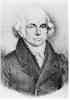
(1755-1843)
“Hahnemann’s medicine films
had been created to a large extent by himself. It looks a very simple matter for
anybody to swallow a drachm of mother tincture of Bryonia and to experience a
great many pains and aches in consequence. Truly this is quite easy. But to
observe all these sensations accurately, depict them clearly in all their true
characteristics and arrange them so that they may be available for use by
succeeding generations – to conceive of the possibility of doing this, and to
execute the work, demanded genius of the very highest order, a supreme artist as
well as a master in all that goes up to make medical science. That the world of
general medicine does not yet know Hahnemann is by no means wonderful. He is
still far and way beyond their range and reach. Mount Everest has not been
conquered yet.”
— Dr. J H
Clarke
In 1755 at a time when blood
letting, purging and other evils marked modern medicine, was born Christian
Frederick Samuel Hahnemann in Meissen, in Germany(10th April). His father was a
porcelain painter and young Hahnemann had to work in the daytime and study his
lessons at night. Inspite of such difficult circumstances – Hahnemann pursued
his studies in Greek, Hebrew, Arabic, Latin, Spanish, English, French and German
languages.
In 1775 Hahnemann joined medical
school and completed his degree four years later. Soon after starting his
practice, Hahnemann was distressed and disgusted by the chaos prevailing in the
name of medicine. Unable to heal his patients, Hahnemann renounced practice of
medicine and shifted to writing books.
In 1790, when Hahnemann was
translating Dr.William Cullen’s Materia Medica into German, he came across the
medicinal properties of Cinchona, wherein it was stated that Cinchona cured
malaria because of its bitter taste. This set off a chain of thought with
Hahnemann not being satisfied with the explanation. There were hundreds of
bitter medicines, so why only cinchona could cure malaria. The footnote in that
page, had a statement that cinchona poisoning led to malaria-like symptoms. This
made Hahnemann start a series of studies, which led to his conclusion that – ‘it
is possible to treat a disease with a medicine which when given to a healthy
person, produces the same symptoms’. But an empty theory was not enough, it
had to proved, so Hahnemann decided to experiment not on animals – but on
himself. He took a dose of cinchona, and this is what he has to say
“I took for several days, as an experiment, four
drachms of cinchona juice, twice daily. My feet and finger-tips at once became
cold; I grew languid and drowsy; then my heart began to palpitate; my pulse
became hard and quick; an intolerable anxiety and trembling arose; then came
prostration in all the limbs; then pulsation in the head, redness in the cheek
and raging thirst; breifly all those symptoms which came to me are typical of
intermittent fever, such as stupefaction of the senses, rigidity of the joints,
but above all the numb,disagreeable sensation which seems to have its seat in
the periosteum over all the bones of the body made their appearance. This
paroxysm lasted for two to three hours every time, and recurred when I repeated
the dose, not otherwise. I discontinued cinchona
juice and was once more in good health”
During the next 15 years, Hahnemann
and a group of his committed disciples started drug provings, the result
of which is the Materia Medica Pura, the book of homeopathic medicines.
Based on the law of similars, Hahnemann termed the new system of medicine as
Homeopathy (Homeo= similar + pathos=suffering). Hahnemann then started his
practice of medicine which made him famous internationally. The system of
homeopathy spread with a lot of converts to this system (including the great
Count von Boenninghausen). The principles of homeopathy were brought out by
Hahnemann in the book titled “The Organon of Medicine”.
In 1835 at the age of 80, Hahnemann
fell in love with a 35 year old French lady – Marie de Harville and married her
and shifted to Paris, where he spent the last days of his life in practice of
homeopathy.
Hahnemann passed away on 2nd July
1843 at the ripe old age of 88.
[ Home page ]
©
Deepak M R (Hahnemann’s photo is courtesy (c) Homéopathe International)