
ESSENTIALS OF
HOMOEOPATHIC THERAPEUTICS.
Pr Willis Alonzo Dewey.
Presented by Dr Robert Séror.INTRODUCTION
Introduction
:(<>),
Préfaces du Pr Dewey : (<>),
Biographie du Pr Dewey : (<>).
La traduction française de cet ouvrage paraît en “version
éclatée” dans le dossier “Thérapeutique Homéopathique
pratique”.
Les travaux du Professeur Dewey sont relativement peu connus des
confrères francophones, et pourtant c’est un auteur clé, pour l’enseignement
de la médecine homéopathique.
Il a une manière, précise, très précise, pointilleuse même, qui
force le lecteur, à prendre une connaissance précise de ce qu’il
écrit.
Si l’on prend soin de bien lire sa question, et d’y répondre, on
ne peut manquer de s’instruire efficacement dans la connaissance de
notre matière médicale homéopathique et de sa pathologie.
Les trois ouvrages clés de son enseignement figurent sur
Homéopathe
International.
La traduction française de ces ouvrages est en cours.
Vous la trouverez peu à peu et d’une manière fractionnée dans le
nouveau volet ” Thérapeutique homéopathique
pratique ” de mon site, à tous les chapitres de pathologie,
tant en Anglais qu’en Français.
Dr Robert Séror (Samedi 13 mars 2004)
Preface
to First Edition.
This work, as its title suggests, is a companion to the author’s ”
Essentials of Homoeopathic Materia Medica.”
The latter was a quiz compend of the Principles of Homoeopathy,
Homoeopathic Pharmacy and Homoeopathic Materia Medica, while the present
work is a quiz compend of the application of Homoeopathic remedies to
diseased states in like manner systematized, condensed and simplified
especially for the use of Students of Medicine.
The ” Essentials of Homoeopathic Therapeutics ” should,
therefore, go hand in hand with its predecessor, since it will enable the
student concisely to perfect his knowledge, not alone in the science of
Homoeopathic Materia Medica, but, what is still more important, in the
practical application of such knowledge to diseased conditions.
One of the grand cardinal features of Homoeopathy and one little
understood by the Allopathic school is the fact that any drug in the
entire Homoeopathic Materia Medica may be a remedy in any diseased state.
It is therefore evident that the preparation of this work entailed no
little difficulty, and that many remedies may be missed where they would
seem naturally to find a place.
Especially have remedies indicated in diseases by their well-known
general characteristic symptoms been omitted.
For instance :
Arsenicum
is sometimes a
remedy in Pneumonia, but the symptoms calling for use, such as extreme
prostration, restlessness, pale face, periodicity, irregular pulse, red
tongue, etc., belong to many diseased conditions, and would indicate Arsenicum
wherever found ;
therefore Arsenicum has
been omitted as a remedy in Pneumonia.
Comparisons of remedies in diseased conditions have sometimes made it
necessary to depart from a strict alphabetical arrangement of the remedies
; for quizzing purposes this is of little import, and for those who may
use the work for reference the difficulty will be easily over-come by
consulting the index, which it has been the intention to make complete.
W. A. DEWEY, M. D.
New York, October 25, 1894
Preface to Second Edition.
The call for a second edition of this little work within so short a
time after the appearance of the first, leads the author to congratulate
himself that it actually found the place in homoeopathic literature for
which it was designed, namely, a companion to the ”
Essentials
of f Homoeopathic Materia Medica.”
While its title is
Therapeutics,
it should be looked
on by the student/simply as Materia
Medica in another
form. If this be done there is little danger of the student falling into
the practice of the ancient school of associating remedies with diseases,
or diagnosis with treatment.
The universal favorable criticism bestowed upon the first edition
encourages the author to hope that the present one in its thoroughly
revised shape may receive the same approval.
Not only has the work been thoroughly revised and numerous errors,
which appeared in the first edition corrected, but also the size has been
necessarily increased by the addition of many characteristic indications.
W. A. DEWEY, M. D.
Ann Arbor, Mich., June 15, 1897.
Chronological
biography of the Professor Willis Alonzo Dewey (Dr. R. S.)
(1858-1938)
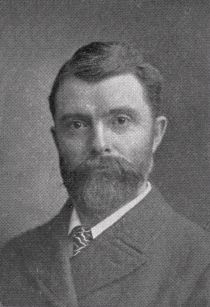
1858 : (<>),
1880 (22 years) : (<>),
1884 (26 years) : (<>),
1888 in 1892 (from 30 to 34 years) : (<>),
1894 (36 years) : (<>),
1900 (42 years) : (<>),
1938 (80 years) : (<>),
The Works : (<>),
His titles : (<>)
.
Birth to Middlebury, Vermont, on October
25,
1858.
1880 (22 years)
Graduate of New York Homœopathic Medical College.
Internal in Ward Island Homœopathic Hospital.
Move in California.
Professor of Anatomy in ” Homeopathic Medical College ” , San
Francisco.
Then,
Professor of Homœopathic Materia Medica in ” Homeopathic Medical
College ” , San Francisco.
1888 in 1892 (from 30 to 34 years)
Publisher(editor) of ” California Homœopathic Journal ” .
Return in New York.
Professor of Homoeopathic Materia Medica in the University of Michigan,
in Ann Arbor.
Professor of Private Hospital of Nervous Diseases, to Ann Arbor,
University of Michigan.
Death, the
1
er in April, 1938.
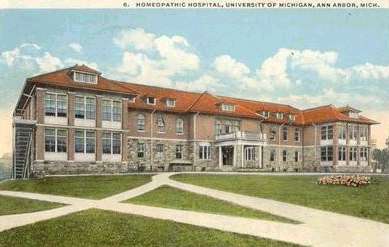
University of Michigan,
Ann Arbor.
 The
TheEssentials of Homœopathic Materia Medica (
1
era publishing(edition) in 1894
, 5
ème publishing(edition) in 1926).
Essentials of Homoeopathic Therapeutics.
Practical Homœopathic Therapeutics (
1
era publishing (edition) in 1901
, 3
ème publishing(edition) in 1933.
The
12
Tissue Salts (with W. Boericke) 1
era publishing(edition) in 1888
, 6
ème publishing(edition) in 1928.
Publisher(editor) of California Homœopathic Journal.
Publisher(editor) of Medical Century.
Publisher(editor) of Universal Homœopathic Observer.
Publisher(editor) associated by the Newspaper of American Institute of
Homœopathy.
Emeritus Professor of Materia Medica and Therapeutics Homœopathique of
the University of Michigan.
Corresponding member of British Homœopathic Society.
Corresponding member of the “Société Française d’Homéopathie.”
Copyright © Robert
Séror 2005.