Homœopathy in the
nursery.
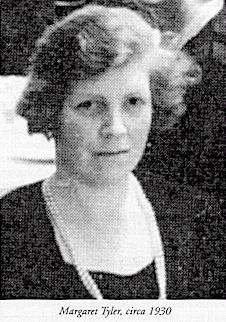
by Dr. Margaret Lucy Tyler
Presented by Sylvain Cazalet
(Address at the Annual Meeting of the
Children’s Dispensary, Shepherd’s Bush, and delivered at the L. H. H. in
April, 1931.)
Dr M. L. TYLEROn this subject I
consider myself qualified to speak : since I had the good fortune
to be born into a Homœopathic Nursery.Our people have been
homœopaths for three generations.Our Scotch Grandfather,
Sir Charles Pasley, K. C. B., R. E., who died in 1861 used to come to
Annual Meetings of this Hospital. I am told that his name appears in its
annals, as moving resolutions. He became a very keen homœopath, because
he was-a man of rare ability and intellect, and his life had been saved
by Lachesis (one of our snake poisons) when he was desperately ill with
pneumonia.My father and mother
were not only keen homœopaths, but most successful prescribers, and
that, not only for their own large family (there were twelve of us) but
also for heaps of people, rich and poor. Where there is no homœopathic
doctor within reach, it is wonderful what good prescribers certain
persons, gifted that way, become ; and how impossible they find it,
to keep the-saving power to themselves. My parents had grasped not only
the Homœopathic Law of “Likes”, that is, the treatment of
sickness by remedies that are capable of producing a like sickness-(such
as, Merc. cor. -corrosive sublimate- for dysentery, which in poisonous
doses it can produce ; or Arsenic for ptomaine poisoning, whose
symptoms are absolutely the same). But my people had gone further. They
had mastered the rules of the game-the “Doctrines of
Hahnemann” in regard to the administration of “like”
medicine : -not only what to give, but when to give and when to
stop. I remember how my mother used to remonstrate with me when, first
qualified, I was prescribing homœopathic medicines in a way that she
knew was wrong. “That is not homœopathy. In acute sickness when
the patient is better -Stop”.Several times my mother
saved the life of one of her children, when -the case being too serious
for her to take full responsibility- an allopathic doctor had to be
called in. I remember one such case. It is so stamped on my memory that
I even remember the Gospel lesson that we had been reading that Sunday
afternoon ! I must have been eight or nine years old. One of the
babies, over-fed by a stupid old monthly nurse, and far toafat, was
indulging in broncho-pneumonia. I remember it so well. Hs was supposed
to be dying, and I looked with awe on his blue lips and bins nails, as
he gasped his little life oat. The doctor had had his innings, and
failed. Then my mother, desperate, came in with her wee globules of Ant.
tart. -that marvelous remedy for little children and old people, when
the lungs are filling up, and the end is near. When the doctor returned
a few hours later, the change was so amazing, that he merely came twice
a day to watch the infant till it was safe, whilst he left the
prescribing to my mother. That infant survived to command the Heavy
Artillery of one of the Divisions in the Great War, and Homœopathy in
the Nursery saved a Brig. General for the nation’s hour of
life-and-death struggle.Another time, of which
my mother has told me, one of the small boys was ill with what was
called English Cholera-and not a bad imitation, apparently, of the real
thing. The doctor -a Homœopath this time- was at his wits’ end ;
the wee boy did not respond. At last he asked, “Is there any
medicine that particularly suits this child ?” “Yes,
Phosphorus,” said my mother, and Phos. promptly ended that trouble.Looking back, I realize
that, except when babies were making their appearance, there have been
very few times when I can remember a doctor in the house. The doctor’s
bill was never an item of family expenditure-and that with father,
mother, twelve children and half-a-dozen servants !Among my mother’s most
terrible -and successful- experiences was when her whole little family
(happily only six of us had at that time arrived in the world) went down
with smallpox. Not all at once. The agony was prolonged. Every fortnight
there was a fresh victim or victims. The eldest boy had brought it back
from school, “where there was a bad outbreak. The disease was
probably modified by vaccination -we had all been successfully
vaccinated- but not one escaped. She ascertained that she could get a
local doctor at need -we were spending the boys’ holidays in the Isle of
Wight- but she could not contemplate the loss of homœopathy for her
little people in such sickness. So she and an aunt worked through those
nightmare weeks, with children smothered with horrible
pustules-sometimes delirious-fretting and needing to be nursed and even
carried about. She has told me how she had to nurse me in her arms
through a whole night, singing a little German rhyme about the dead cat
and the mice dancing for joy in the straw. But she got us through ;
and we were none of us marked. That was indeed “some Homœopathy” !
-in the Nursery.She had great times
with whooping-cough, measles, chicken-pox (for those who had not had
smallpox), and these all came, “not as single spies, but in
battalions” -because our name was legion. Then with all the minor
ailments of a less serious character and more personal-colds and
coughs-stomach-aches and sickness and diarrhœas-my parents abundantly
proved the value of Homœopathy in the nursery. No wonder that they were
keen homœopaths ! When my father, late in life, spent six months
in Peru on behalf of the Peruvian Corporation, of which he was Chairman,
he went armed with a little homœopathic medicine chest, and he told us
how people used to come up to him after Sunday Service in Lima,
“Oh, Sir Henry, I went you to prescribe for me !” He had
learnt his Homœopathy in the nursery and had the common medicines at
his finger tips.He was for many years
on the Board of this Hospital, and as Chairman of the House Committee
took a very active part in its management, and his last great act-really
the outcome of Homœopathy in the nursery ! -was to provide for its
extension. He said to me, “I have done my part, in enlarging the
Hospital -you must do the rest !”- the rest being, to man it
with homœopathic doctors. So you see I have inherited a great task,
which I have toiled for many years to discharge.In our nursery there
were two devoted nurses -sisters- who were with us for many years. My
mother was very lucky, for they were a farmer’s daughters, and vastly
superior to the run of nurses in conscientiousness and intelligence. In
their day there was always a small homœopathic nursery medicine chest,
in whose use for emergencies they became very proficient. They had
Aconite for sudden feverishness, Dulcamara where the little ones had
been caught in the rain and got wet, and so on. I remember that Nux was
dubbed by them “temper medicine” -not a bad description of the
action of that remedy.But medicines have
opposite actions. Nux only helps temper because of its power to evoke
it-in sensitives. And my mother has told me how, in Church one Sunday,
she suddenly remembered that she had given Nux that morning to one of
the children, and how that “poor child” was always upset by
Nux, and how she came home to find, as she expected, that he had been a
perfect little demon. He was hypersensitive to Nux, and had “proved
it”.One of the amusements
we used to provide for our mother and the nurses-so long as we lived by
the river at Hampton Court -was croup, to which most of us were, on
occasion, addicted ; wet feet or current buns were supposed to be
among the exciting causes.
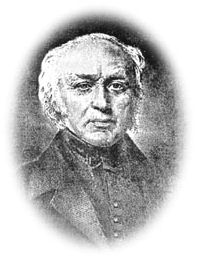
Dr C. von BœnninghausenAnd here the celebrated
“Croup Powders”, Aconite- Hepar and Spongia, saved the
situation every time. For years these three homœopathic remedies, in
the 200th potency, were sold by homœopathic chemists as five powders-to
be taken in a certain order- should so many be required- Acon. -Spong.
-Hepar -Spong. -Hepar -“Bœnninghausen’s Croup Powders”.I was not long out of
the nursery when I made my own first experiment with Homœopathy. I was
always a bit “uppish”, and used to think, in my abysmal
ignorance, “Why do we have these funny little globules ? Why
don’t we have doctors and proper medicines, like other
people ?”Well, we were living at
Wyvenhoe Hall, an old Domesday Book house in Essex, and my mother was
away for a day’s shopping, and I -perhaps fourteen years old- was the
eldest at home ; when word came through that one of the housemaids
was ill, in great pain, and that her ailment was “spasms”.I consulted my mother’s
books and discovered Spasms-whatever they might be ! -and for
Spasms- Nux. This was fine ! So the housemaid got Nux, -and I
sensed POWER- for I had promptly cured my first case.I remember a very
humorous cook of ours -an Essex woman- telling me about a small boy and
his results with Homœopathy. His mother had a garden party, and one of
the guests was taken ill : “So blessed if that little nipper
didn’t run off and get her some Pulsatilla, and it cured her too !
What do you make of that now ?”That is what Homœopathy
is ! -so simple -so sure -so rapid in action- where you get the
right remedy ; and a child may find it ! -that is to say, in
the simple illness of healthy people. In the chronic sickness of
diseased people it is not quite such a simple proposition.Now what I would plead
for is a return to the good old days of our mothers, with a homœopathic
medicine chest in every house ; and most certainly in every house
where there are children.What should it
contain ?First and foremost,
Aconite. That quick-acting remedy, perfectly harmless in homœopathic
potencies. It comes in for the effects of chill-fright-strain :
such as restless feverishness- tossing and sleeplessness-bounding
pulse-agonizing turmoil. In adults and in children, in sudden,
superficial ailments, it is priceless. The sufferer turns over and
sleeps his way back to health. Or, if some deeper condition is
threatening, it will be modified by starting with Aconite for such
symptoms.In these days everyone
seems to resort to Aspirin, which masks symptoms-temporarily dulls
pain-and cures nothing. Aconite soothes by curing.I would like to tell
you of an early experience of the celebrated Dr. Burnett in Homœopathy :
it is told in his brilliant little book, Fifty Reasons for being a Homœopath.He was out to prove
Homœopathy “a lying sham”-a “therapeutic Nihilism”.
So he would try it at the bedside, and expose it- to an admiring
profession.(It is a curious fact
that some of the greatest homœopathic doctors of the past started just
that way. They looked into Homœopathy -in order to disprove it- and of
course they were caught.)Burnett was then in
charge of a ward where sick children were -admitted and kept under
observation till, a diagnosis made, they could be drafted off into the
wards, as measles- pneumonia- rheumatism- or whatever it might be.
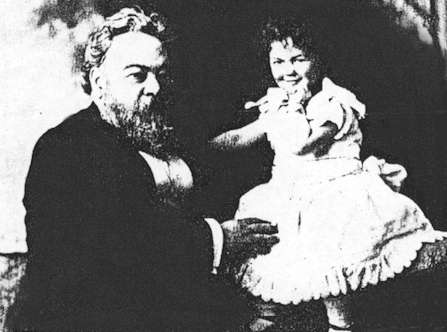
Dr James
Compton Burnett with TopsyAs feverish colds were
just then prevalent, he put a few drops of Aconite tincture into a large
bottle, and gave it to the nurse, with orders to administer it to all
the children on one side of the ward as soon as they came in ;
while the children on the other side of the ward were to have no
Aconite, but the customary treatment.Next morning he got his
shock. Nearly all the children on the Aconite side were feverless, and
mostly at play in their cots ; one only had measles ; and he
found that Aconite would not cure measles. Those on the non-Aconite side
were worse -or no better- and had to be sent into hospital with
localized inflammations- catarrhs, etc.This went on for days.
The Aconite children were generally convalescent in twenty-four to
forty-eight hours, except where the seemingly simple fever was the early
stage of some specific disease -scarlet fever -measles -rheumatic fever.
But most of the cases were genuine chills, and those Aconite cured right
off.The nurse christened
the bottle, “Dr. Burnett’s Fever Bottle”.Burnett was simply
dumbfounded. He began to spend long night-hours studying Homœopathy.Then, when he entered
his ward after an absence of a couple of days, the nurse seemed rather
quiet and informed him that all the cases, she thought, might be
discharged. “Indeed ? -How’s that ?”“Well doctor, as
you did not come round Sunday or Monday I gave them all your fever
medicine. I hadn’t the heart to see you go on with your cruel
experiments. You are like all the young doctors that come here… you
are only trying experiments !”So all the children got
the benefit of Aconite so long as Dr J. Burnett was in charge in that
place.And here you see the
enormous advantage of Homœopathy on the spot, to abort promptly what,
left alone, would be perhaps a serious illness.I showed you the
Aconite picture, of restless fever and agonizing turmoil. Next you must
have Belladonna, with its fiery-red face-dry, burning skin-bright eyes
with big pupils-twitchings, and starlings in sleep-even to convulsions.
You may see the Bell. picture in teethings ; or in the early stages
of chest troubles ; or in scarlet fever-where it works miracles,
modifying and controlling the disease, or even aborting it. I have seen
this ; and Dr. Lambert, a very keen homœopath, told me, some years
ago, “Either I don’t give Belladonna, or I don’t notify.”
Belladonna in scarlet fever had made a fool of him so often (in the eyes
of Health Officers !).Then Calcarea,
for the difficulties of teething. It helps babies and it
helps little pigs ! For I get asked for Calcarea at our farm when
little pigs are not doing too well. It makes them fine and strong, I am
told. The Calcarea baby is late in teething ; a fat and flabby
child ; inclined to be rickety and to soak its pillow at night, so
greatly does the head perspire in sleep. When I took over the
oat-patient children at the Hospital during the war I saw the marvelous
effect at Calcarea in rickets-even in bad cases with much deformity.Then Chamomilla,
with the restless misery that takes the shape of vile temper. The child
demands a thing-to hurl away. Wants to be carried and screams it set
down. Wherever you get this frantic, restless irritation-in babe or in
adult-Chamomilla will be oil for the troubled waters.
Dulcamara –
for
the effects of cold damp-wet feet-chills and diarrhœa, when evenings
are cold after a hot day-or when the weather becomes suddenly cold. It
will often clear off the so-called “milk-crust” from a baby’s
head ; and it will not harm it, as the smearing on of skin
preparations may do. You want to cure things, not to “drive them
in”, the worse troubles later on.But
Arsenicum must not be forgotten. A great remedy for ptomaine
poisonings. The Ars. picture is : great
prostration-coldness-restlessness-fear-diarrhœa and vomiting-sometimes
simultaneous ! -a remedy of sudden, desperate illness. Arsenicum
should be in every house for prompt use ; and that not only in the
nursery ! It is marvelous to see how rapidly the sufferer reacts to
Arsenicum. The diarrhœa stops, the patient becomes warn and peaceful-
the storm is over. I have seen several cases of this absolute magic.
Bryonia,
again. Pain anywhere-head, chest, joints ; but everything better
and rest, and intensified by every movement. Tongue white ;
thrust ; and the patient wants to be let alone.
Mercurius,
for complaints with profuse, offensive perspiration ; foul mouth,
filled with offensive saliva. You may see this condition in influenza
and fever-in sore throats-in rheumatism, etc. Your nose and eyes will
not miss it, even if your knowledge does not go so far !
Nux.
Constipation
with stomach-ache, and pinching, spasmodic pains. Nux is
cross-quarrelsome-very shivery-has perhaps eaten too much.The
Pulsatilla child likes to be petted. Fat, fair,
fretful ; jealous and wants attention : -often selfish Cries
easily ; and can be made to laugh again easily. Indigestion, in
such a child. It hates fat ; is rot very hungry or thirsty. A great
remedy for measles ; -in chilblains, where they are more painful
when hot ; -in earache -in inflamed eyes.The children who
respond best to Phosphorus are the tall, thin, delicate children who are
afraid of so many things-as, the dark-of being alone-of thunder. They
are apt to crave salt and to be thirsty for cold water. For such
children Phos. is a great remedy for colds and all chest
complaints ; also for diarrhœa with a little blood in the motions.
Sulphur :
A
rather greedy child-hungry, anyway ! eats everything, so long as
it’s something to eat. Like fat ; -kicks off the bed-clothes.
Sulphur has often fair, unruly hair ; is argumentative- the little,
grubby, rugged philosopher. Not too clean ; not at all tidy ;
and not fond of a bath.But
Arnica must not be forgotten ! -for falls-bruises-
sprains-for all injuries, slight or serious. It must be given internally
always ; and applied externally, but only where the skin is not
broken. Where skin is broken use Hypericum (or Calendula) externally.Then Drosera
for whooping-cough. I had much experience with this during the war, in
the children’s department. One dose of Dros. will generally cure, or
greatly modify, whooping-cough in a week to fourteen days ;
Hahnemann tells us that it should be left to act, and not repeated- the
miracle is to work !Influenza may reed
Gelsemium. -or Baptisia. Gels. is the shivery, heavy-eyed and
heavy-limbed type : Baptisia the dull, besotted condition, dull-red
and drowsy. Or Eupatorium with terrible bone pains. All these remedies
you should have at hand.
Lycopodium
may
come in where there is sand on the diaper or where the urine is acid,
and marks the body sore wherever it comes in contact with the skin, A
Lyc. child is very fond of sweet things, and get a lot of indigestion
with much distension and flatulence.Ah, but you have not
the gift of prescribing ? you would distrust yourself ? You
would want help ?And please don’t run
away with the idea that I want you to start treating smallpox !In these days there is
the telephone. What a comfort the telephone would have been, times
without number, to my anxious mother in her isolation : who did not
dare to commit her precious children to an allopath when she knew that
Homœopathy could cure them so much more quickly-surely-and safely.That is Homœopathy
-quick -sure -safe.But in these days you
can ring up the Homœopath doctor if he is out of reach, and he will ask
symptoms and tell you the remedy to give. And you will not have to wait
and send round and round the world to get it. You will be able to give
it, at the time when it will help most-and that is, at once. You will
open your little box and put a few globules on the sleeping infant’s
tongue, and it will suck at the sweet nothings without waking, and find
healing.But one word of
warning. Get your medicines at a homœopathic Chemist. Don’t go to just
any chemist who “Yes ! he does sell homœopathic
medicines”, and get strong tinctures. The potencies are safe ;
not so the strong tinctures. Homœopathic Nux, in strong tincture, is
actually stronger than allopathic Nux. And Dr. Burnett’s experimental
babies, treated with crude Aconite, though cured of their fevers were,
he tells us, rather pale and had perspired overmuch.Get your remedies at a
good homœopathic chemist. And let them be not less than the 6th or the
12th potency.But these are the evil
days of small families-or none-and the modern young woman knows little
of the joys and anxieties of that “heritage and gift that cometh of
the Lord”. They little realize how much they forfeit-not only in
happiness, but in health, by their self-imposed limitations.For statistics show
that, among married women, it is the mothers of large families who are
not only the healthiest but the longest lived. Nature is not kind to
those who flout her. She has her own way of settling with them.For their own sakes,
women who do not wish for children should not marry.I think of our merry,
wholesome, happy young days. I see these wretched “only
children”. Their normal childhood has been denied to them. It is in
the home that one learns to give and take, that the angles get rubbed
off, and that one learns to face the world. And then, the anxiety of an
only child ! A rich, childless man told me once that what he wished
for his worst enemy was-an only child !Then how do you women
know that your husbands will not seek elsewhere the home life you deny
them ? It is not the fathers and mothers of happy nurseries that
crowed the divorce courts.And then-for the sake
of the nation. How is this grand race of ours, with its amazing mission
of peace and prosperity for the world, to be continued in the face of
race-suicide ? And remember, the first child is seldom the best
child !It is the nurseries of
England and Scotland that have built this mighty Empire ; without
the nurseries the race must deteriorate and the empire pass.But it will not !
It is the crazes that pass-always. The nursery will reassert
itself ; and the Homœopathic Nursery is the Nursery, as Survival,
and of (comparative) Peace.
Source :
Homœopathy, Feb. 1934.
Copyright ©
Sylvain Cazalet 1999