Philosophy and the Repertory.
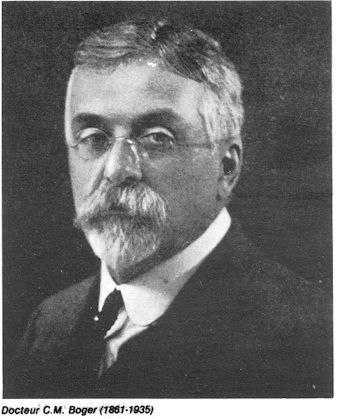
By Cyrus Maxwell Boger.
Presented by Sylvain Cazalet(Read before I. H. A., Bureau of Materia Medica, June 22, 1934.)
Our old, brutal materialism seems to be slowly melting away, gradually merging into what a clearer
light shows to be action, reciprocal on every plane ; even medicine is not escaping the metamorphosis. The power of nature which demonstrates the
survival of the fittest is being transformed into another phase wherein its contained good is made to grow at the expense of that which is not quite so
good.Early medicine did much groping about until the later Renaissance opened up even the doctors’ minds to
the hidden treasures of the past as well as excited their curiosity into turning them into newer paths.Such a background helps us to understand how the spirit which animated Hahnemann finally led him into
researches of which we today are the beneficiaries. Whether we shall continue to deserve the legacy must rest with every individual conscience. Let it
not be inferred that a mind capable of bringing to the light of day such an ethereal concept of vital action, must necessarily also inaugurate an
irresistible reform. The thinking processes of an eminently conservative profession are far too Darwinian for that. We must remember that a concept
having the form of finality is moribund from its inception.In the very year of my graduation Madam Blavatsky laid down the postulate that “the essence of
life is consubstantial with electricity”. We are only now beginning to fully realize how true this is. She further said that before the end of the
ninetieth century new discoveries would upset the dicta of science. It was left to the role of our own Madam Curie to fulfil this prophesy. How well she
did it we realize more and more every day. Truly the destructive power of radium is not limited to malignancies by any means, and by the strongest of
inferences we must admit that the developments of physics have rung the death knell of crude drugging as well as brought general medicine face to face
with Hahnemann’s experiments and their consequences. It only remains to be seen whether general enlightenment or medical progress will force the issue.
The ax has been laid at the tree of preconception and purely materialistic reasoning.In order to correctly sense the sharpness of his tools the physician must needs have a just
comprehension of the physics of life especially as implied in the philosophy of the Organon. He will then realize
that Similia Similibus Curantur is a phase of the law of action and reaction on a higher plane. It is an extension
into the super physical where stabilization occurs, as here, through the conversion of energy. In other words health cannot be regained until harmony in
the expenditure of vital energy again prevails. It is now beyond cavil that harmony can only be established through the contact of a synchronously
acting or vibrating force. Manifestly this must be made through the nerve channels.It is perhaps not too much to infer that this vital force must be of a fluidic nature and at present
perhaps still super physical, although we are confessedly on its borderland now. It is also inter penetrative in that its effects are practically not
only local but general at the same moment. This conception of its action explains how it comes about that amelioration is felt in the mind first, and
progresses as long as no mental revulsion occurs. The first intimation that the remedial response is beginning to slacken comes through mental attitude.The experience of much prescribing often causes one to settle upon the use of only a few drugs or at
the best into choosing the more promising one from a rather small group. It is a loose and easy way that neglects the minority indications, therefore is
less precise and efficient. It smacks of indolence and lack of mental agility, reminding one that versatility is not acquired here any more easily than
elsewhere. We are daily confronted with atypical cases that make the careful assembling of all of their symptoms very important if we with to obtain a
clear image for which a counter-part is to be sought among our provings.For this purpose we first search the repertory and then compare the actual provings unfit convinced of
their similarity. At present, it is the only feasible method, but it is surprising how few men really know how to go about doing it well. Repeated
practice, however, soon makes for skill, particularly in evaluating symptoms, which is, after all, exceedingly important as well as has considerable
value in prognosis. Over stressing single symptoms or the wrong one easily leads to one-sided prescribing, palliation and ultimate confusion. The whole
picture with certain outstanding points is the ideal to be sought for, if we wish to succeed.About a score of our drugs act out the common ills of life in their pathogeneses. These Hahnemann
called polychrests and if we must have favorites let us learn all we can about these first of all. They especially include Aconite,
Belladonna, Bryonia, Chamomilla, China, Cina, Ferrum phos., Gelsemium, Hyper, Ignatia, Ipecac, Lachesis, Mercury, Natrum mur., Phosphorus, Pulsatilla,
Rhus. tox., Sulphur and the Veratrum. The sick making properties of these drugs resemble those of sick
people rather than disease forms. This is a very vital distinction for the homœopath.At the most drug action can simulate types of disease in part only. No human entity can show forth all
or even a majority of the symptoms appertaining to a single drug or even of a single type of disease. The nearest approach to this specificity is
perhaps the relation of Mercury to syphilis and yet Hahnemann, like the rest of us, supplemented its use with other
drugs when quicksilver lagged because of the presence of heterogeneous factors. The latter show themselves as side symptoms seemingly having no
connection with the disease in hand ; for which reason we view them as the outcroppings of other miasms, that thereby deflect the vital force by
just that much.The older homœopaths ascribe poor results to the presence of an all pervading miasm which obscured and
distorted the real indications. With an enormous increase in available pathogenetic symptoms we do not feel this need so acutely, albeit often to our
own disadvantage. Most prescribers gradually enlarge the scope of their remedies quite beyond their seemingly legitimate sphere of action. This springs
from the fact that the simillimum releases reactive power strong enough to re-establish harmony, which in turn is capable of sweeping away almost any
morbid condition. The crude similar, however, can remove but a small part of the symptom complex and leaves behind a distorted image of the sickness,
much harder to treat.The best that can be said for partial prescribing is that sometimes removes the superimposed load which
blocks an effectual reaction. Such an impediment originates in the presence of some miasm, pernicious drugging or suppression. Hahnemann inveighed
strongly against excessive depletion and pernicious polypharmacy ; we, however, are faced by the still more dangerous procedure of serumization and
ray treatments. The first always holds the menace of sensitization and vasomotor effects, while the latter drives back upon the vital force every
eliminative function ; a more dangerous procedure is hard to imagine.All in all it may be said that the utter therapeutic confusion of dominant medicine is only too
apparent to one who thinks clearly. It re becoming increasingly evident that autoantidotalism, as serumization in the old school and Isopathy in our
own, has captured a large part of the therapeutic field. In either form it is incapable of doing more than removing a present incubus, leaving the basic
miasm untouched ; it therefore falls short of being the simillimum, hence of doing the most good possible.A word in conclusion. Jahr was ideally correct in slating that proper repertory analysis as well as the
pathogenetic picture should point out the same remedy independently of each other ; but practically most of us use the former to amplify, clarify
and complement the latter. For us the proving text is too rigid and lacking in flexibility without the addition of some imagination ; always a
dangerous recourse, because resemblances are not equally evident to us.For this reason we need the check and counter check of clinical evidence, in order that our remedies
may be properly delimited. This can be best accomplished by a system of coapting symptoms and their related remedies as is now-a-days done with card
indices, although these are confessedly now in their formative stage. The procedure itself yields an entirely new point of view and one fully consonant
with Hahnemann’s conception of the deduction to be drawn from the clinical picture.The method steps down the enormous rubrics of generalities and adds new ones composed of the most
diverse elements present in the clinical, picture, thereby forming the combination most likely to contain the particular minutiæ so decisive for the
homœopathic remedy. In parting I have a word to leave with you : Hold fast to the law, learn its implications and thereby
cure others ; it is the only way it can actually be accomplished. Are we as prescribers and healers ready to take what should be the
leading part in the reformation of therapeutics ?
Parkersburg. W. VA.
DISCUSSION.
Dr. Donald Macfarlan
: We ought to have a philosophy in life, and in medical
life, especially. The three principal things, you might say the trinity, which are most valuable in homœopathy are the law of cure, in a single remedy,
in a minimum dose ; and that is just how Hahnemann developed this system. First dawned upon him the law of cure, and then in order to expedite
cure, and in order to avoid aggravation, he got the minimum dose.Those three things have to enter into every correct homœopathic prescription. They are inseparable. Associated with them is the
frequency of repetition. I believe that the only way you can skillfully adapt yourself to proper repetitions is through provings, because you have your
hand in making well people sick and, conversely, making sick people well.The first thing that enters my mind when I see a sick person is this : What remedy which you have proven would make this fellow
look like that ? And, if it occurs to my mind, say that he needs Phosphorus, I give him Phosphorus.
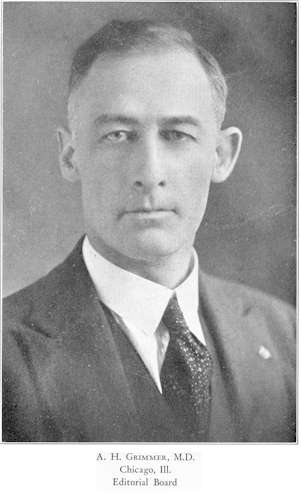
Dr. Grimmer :
Dr. Boger always gives us a splendid paper and this
is an exceptionally good one, even for Dr. Boger. It really is a textbook in a way. He has shown us the fundamentals, the things that are so essential
to keep in mind ; first of all, the correct taking of the case ; second, the evaluation of the symptoms-don’t forget that. You can have pages
and pages of symptoms and have no case, and other doctors can give you three, or four, or five symptoms, and you have the picture of your remedy. That
comes from the art of evaluation of symptoms, knowing the symptoms that are really symptoms of that sick patient, separated from the symptoms of
disease, the pathological symptoms, the symptoms that come as diagnostic indication. They are not so valuable. Many times they are almost valueless as
far as prescribing goes.Dr. Boger has gone further. He has shown the relationship of these finer forces. It is the study of these finer forces and their
origin that is going to make homœopathy accepted, and science is beginning-at least the progressive portion of science, consisting of the great
physicists of time-to pay attention to these very forces.They have got so far beyond the ordinary sciences that they acknowledge that they cannot prove some of the propositions. Compton has
said that we have to accept some of this phenomena on faith as it were. He has got beyond the idea of an automatic universe, not that he can prove from
reasoning altogether, but from the higher perception, the kind of perception that Hahnemann had. He knows there is something beyond all these material
things we see around us, and that is what homœopathy is. It reaches up into other planes. It reaches up into the mental state, even into the spiritual,
side of life, and that is why homœopathy is vital. That is why it cures. That is why it can wipe out inherited conditions.Did you ever stop to think why a homœopathic potency is especially adapted to wipe out inherited traits ? We are told by
scientists that a little grain of a cell, among the finest of ultramicroscopic cells, carries all the germs and the chromosomes of the past. Nothing can
touch that but the homœopathy remedy, and that is why we can prove it scientifically.
Dr Alfred PulfordDr. Alfred Pulford :
The whole thing devolves upon two propositions, the taking of the case,
which is the primary thing and the next thing devolves on the primary action of the drug upon the human being.I have possibly the most complete card repertory that there is in existence, but I have never used it. Just lately I took three cases
and, if I had not been well acquainted with the primary action of the drug on the individual, I would have spent ample time and possibly lost of the
case, but, as it was, the case as taken brought out the indication of the remedy so plainly that within a moment of taking the case, I had the remedy,
gave it in the 1000th potency, and never had to repeat the dose.
Dr. Bryant :
This is one of the papers I came three thousand miles to hear. I don’t think Dr. Boger realizes that in
the Far West he has many friends and many admirers ; in fact, it is this International Hahnemannian Association that really keeps us men in the Far
West interested and stimulated and inspired.I have had the pleasure of coming into homœopathy by true apostolic succession. I was a “regular” and met with Dr. Walter
James ; I saw him pull my wife out of the grave when it seemed that nothing more could be done, and then when I knew what it was really all about,
I realized that Walter James had been associated with Adolph Lippe for seventeen years, and Adolph Lippe was a pupil of Samuel Hahnemann, and I am a
pupil of Walter James ; therefore the apostolic succession.Here is what I want to tell you that Walter James explained to me as having been handed down by Adolph Lippe, and as now again
explained by Dr. Boger : The length of action of remedies and how we can, persuade patients or enable patients to help us know when the remedy has
actually acted itself out ; and this was the diagram he gave me, and it is so indelibly impressed on my mind that I thought probably it would be of
some use to you.First he drew two lines (using the blackboard), this line up here representing health, and this line disease. It was very difficult
for Dr. James to get to me the fact that a remedy of high dilution can act a long time, and in order to fasten this in my mind, he made this diagram.
Here is your patient. Now, suppose you are using the 30th potency, he says if the remedy is properly selected, the patient immediately begins to feel
better, which means he rises toward health. He calls that period the period of primary amelioration.Perhaps you all know this.
Dr. Grimmer
: It won’t hurt us to have a repetition.
Dr C. P. BryantDr. Bryant
: Then he explained to me how nature steps in and
causes reaction to cure, and then this takes the downward turn, the period of aggravations ; according to the potency you have, of course, these
lines are long or short, but anyway, whatever the patient has gained here, he is sure to come back to, or he is going to die. If he cannot rise from the
period of aggravation, you have a hopeless case, and that is one of the ways in which you can gauge prognosis.Then he travels along here until he goes through the same cycle again. I have used this with patients right along, who did not
understand homœopathy, and didn’t know what I was talking about. They say, “Dr, Bryant, I can’t take the medicine, because I feel very much
worse.” But, if I take the time to explain to them the periods of action and reaction, they understand that.I have always kept that diagram and have had many patients I have been able to hold where otherwise I would not have been able to do
that.
Dr. Boger :
I think the discussion is worth more than the paper. I frequently tell my family that you never can see
the end of a false action. The ultimate end of a false action can never be seen :Dr. Bryant has told us about Walter James. He didn’t know that I knew Walter James very well. Walter James and I were great friends
for a while, up to the time I left Philadelphia, and all that he says about Walter James and Dr. Lippe is true, and how much I got through Walter James
and Dr. Lippe and he from Hahnemann direct, I leave for you to guess.This action and reaction coincides exactly with my experience, that wave of action and reaction, and most aggravations come from
the-fourth to the sixth day after giving a remedy, sometimes the seventh day, and, as Dr. Bryant has pointed out to you, it depends on how deep the
patient goes down in the aggravation whether he is ever going to come back again. Why is that ? That depends on the amount of stored energy he
holds. If he doesn’t have stored energy enough to come back, he never can come back, and every good homœopathist has been guilty of killing patients
right at that point. I don’t make any exception at all. Every good homœopathic physician has been guilty of killing patients right there. He has caused
a reaction which destroyed the patient. I have seen it.What are you going to do about this thing ?
There is one very good point that has been handed to us by Hahnemann. Where you are suspicious that the action of the patient’s
stored vitality cannot sustain the shock, give the remedy by olfaction ; that is good practice, and you will get reaction, but much less violent. I
know that from actual experience, and you will bring out things that you can’t get otherwise, and you won’t cause such a terrible drain on the patient.Dr. Stevens : You mean in the first place give it by olfaction ?
Dr. Boger :
Yes, the first thing.
One of the commentators intimated non-action, when you don’t get action from remedies, and there seems- to be no response at all.
Non-action simply means you haven’t touched the cord of harmony ; that is all it means, and you always have behind that the remedies which bring up
reaction, such as Psorinum, Sulphur, and so forth. You can’t get well without reaction, without re-establishing
harmony. That holds good in the physical world and in the mental world.The physical body contains a certain amount of stored energy. When you give a remedy, you tap that stored energy through an
equalization of its distribution in the body. In that way you restore harmony, just as surely as you can tap electric current by pushing the button.There is one point I didn’t bring out in the paper as fully as I should have done, and that is that we can’t all see resemblances as
well as we should. Sometimes my mind is fitted so that I can see certain resemblances and the other fellow can’t, and sometimes it is the other way
about, and the other fellow sees the resemblance and I can’t see it, even when it is pointed out to me. That is an inherent factor of the mind.I want to recite briefly an experience I had not long ago, right along that line. A man came to me from a distant city and said he
hadn’t had any benefit a tall from the treatment he received there. He had generalized eczema from head to foot, and those cases are always very
difficult. I hesitate to prescribe for them because, I am free to say, my success, is not invariable.I sat and talked to him awhile. He had it so badly that the skin was cracked in places and exuded a nasty, offensive, sweet odor. His
face was bluish, and all together he was a rather forbidding sight. The longer I talked to him the more I became convinced that he was an exact replica
of poisoning by Rhus venenata. I didn’t look up the materia medica for that at all, but gave a single dose of Rhus venenata
MM. potency.I said, “Don’t take this till you get home, because something is going to happen.” He waited until he got home and took it.
The third or fourth day he began to sweat all over. Then it was confined to the left chest. It had the odor of rotten smoke. He had gout stones in the
lobules of both ears. Those both dropped out and he cleared up all over, peeled off all over.Now, that Rhus venenata didn’t cure him, because after a while it came back a little, but it
didn’t come back enough to worry about and I didn’t repeat the dose. I am going to let him ride along and see how much reserve force he has back there
to stabilize this thing again.
Source :
Homœopathic Recorder, May, 1937.
C. M. Boger
Parkersburg, W. Va.Copyright © Sylvain Cazalet 2001