Main
Pioneers
of homeopathy
by Dr Thomas
Lindsey Bradford
Presented by Dr Robert Séror
General
Count Iseman von Korsakoff
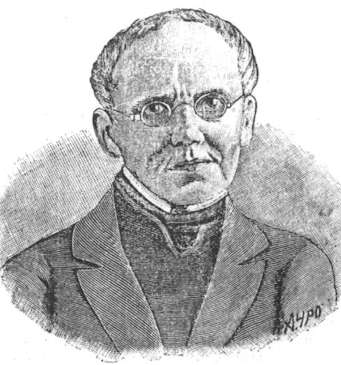
Biography of
General Count Iseman von Korsakoff (1788–1853)
Korsakoff
, was a noble landed
proprietor living in the neighborhood of Moscow, who
became interested in Homoeopathy before 1829.
It is likely that he was the first Russian convert.
In June 1831, he sent to the
Archiv. of Stapf one paper entitled:
Experiences on the Propagation of the Medicinal Power of Homoeopathic
remedies.
Together with some Ideas of the mode on which this propagation takes
place.
This was in regard to a new method of medicating pellets ; he advocated
placing one dry medicating pellet with a great number of unmedicated
pellets in a vial, and said that the one medicated peilet would medicate
all the others.
Hahnemann
follows with a
paper on the subject.
Hahnemann
was a friend and
wrote to Korsakoff and in a mesure approved of his ideas.
Of
course there was a branch of the Homoeopathic School who did not
put faith in the ideas Korsakoff originated.
Doctor
Roth, in an article on Hahnemann’s ” Merits, Errors and critics”, published in 1872 in the British Journal, says :
“This unhappy and mystic idea of a
dematerialisation
of the medecines, and of the
transmutation of a material medical substance into an immaterial medicinal spirit, which has
proved the greatest impediment to the rational development of
Homoeopathy, unhappily suggested to a layman, a Russian, Count Korsakoff, the notion of infecting 1000 unmedicated sugar globules
previously moistened with the 300 th part of one drop of the 100 th
dilution of a medicin ; this was the mischievous commencement of the
disgraceful high potencies, although, according to Dr. V. Meyer (A. H. Z., vol. 58, P- .57), Hahnemann was
satisfied with the 30th dilution, and did not approve of the higher dilution”.
Once this (diluting) must
have
an end, and cannot. continue into the infinite.”
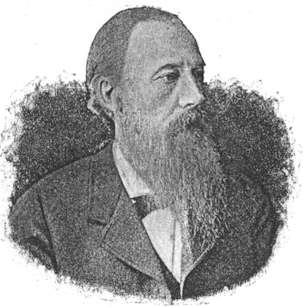
Dr
Carl BOJANUS Sr
Dr.
Bojanus says that Admiral Mordwinoff, not
only an able officer, but a man of high literary and scientific
attainments, writes thus to Korsakoff, another disciple of Hahnemann. ”
While the cholera is slaying its victims here (St.
Petersburg), the new and old schools are quarrelling ; the
physicians, superior by position and number, put everything at stake, in
order to destroy the results of the former ” (new school). ”
Herrmann
writes to me that he
had to give up the treatment of cholera patients in the hospital, for all
those who were sent to him were dying, and had already gone through the whole course of allopathic
treatment.
All methods are admissible here, only Homoeopathy is persistently
persecute ?”
Korsakoff
was probably the
earliest convert (in Russia), for he wrote to Hahnemann in
1829, in regard to a new method of rnediciating homoeopathic pellets,
which suggests some previous study of and acquaintance with the subject.
Although no physician
Korsakoff has perhaps done more than any one else to
prepare a safe foundation for Homoeopathy in Russia.
He went much farther than an amateur ; he studied, tried, examined, and
succeeded in making discoveries in which no one before him had thought,
not even the
Master himself, then living.
That
Hahnemann esteemed him highly is proven by a letter
found amongst Korsakoff’s papers, in which the venerable Master says :
“I admire the zeal with which you devote yourself to the
beneficial healing art, not only in order to have help for your own family
and neighbors, but also to penetrate the secrets of nature, as proved by
your valuable notes.
I like one of your last suggestions, handed to my nephew, to decide on
the suitable remedy by the test of smelling it.
I have myself seen experiments confirmed.
With my utmost power I try above all things to find out what will be of
most use to my fellow men.
I take this for the best road, in which the happiness of us mortals
during this short life is to be found, and I am convinced that you also
are of this opinion.
Continue an activity which satisfies a feeling heart and do not relax.
This is my desire, to enjoy your favor.
”Your most devoted,
S. Hahnemann.
From other papers we learn that
Korsakoff had
occupied himself with medicine before his conversion to Homoeopathy.
He left five books ; containing 302 copies of allopathic prescriptions,
and the particulars of cases treated up to June, 1828.
From february, 1829, another journal of homoeopathic treatment of
family and dependents, continued till 1834. records 11,725 cases.
From that time he seems to have made no record of cases, though he
continued to administer as before to the sick on his estate, giving their
claims at all times precedence of other affairs.
He was an active and efficient propagandist, and his literary
productions bear the stamp of an eminently original and thoughtful mind.
In the cholera years 1830 and 1847,
Korsakoff was
elected by the nobility, district inspector.
From this appointment, we derive notes on the character of the cholera
in
Orenburg; of its treatment in Kasan by Arnhold, and in Pensa by Peterson; its
course in different European countries, also the results of homoeopathic
treatment of cholera in the old Catharine
Hospital, under the management
of Dr. Goldberg, showing that out of 1,274 cases in 1841-4
the mortality was but 6 per cent.
To facilitate the selection of a remedy by some general classification,
Korsakoff studied and recorded the mode of action of
animal, vegetable and mineral substances, alkalies and acids, on different
parts of the body.
This work, though it bears the stamp of
Laymanship, gives some
valuable hints.
When
Korsakoff died, in 1853, he had labored faithfully and
successfully for twenty-six years for the advancement of Homoeopathy.
As originator of the high potencies, he did a great service to the
cause of Science, and it cannot be denied that he proved the efficacy of
certain substances in a degree of attenuation far beyond all conceivalable
limits.
Future times, perhaps, will know better how to appreciate stwh
discoveries, which hitherto, it must be owned, have promoted discord and
contention to a far greater extent than they have produced conviction.
(British Homoeopathic Journal, volume 5, page 120 ; volume 30, page 72
; volume 38, page 310.)
(World’s Conv., volume 2, pages : 253, 255)
(Kleinert, pages 150, 210)
(Rapou, volume 2, page 556).
Extrait du
livre du Dr Thomas Lindsey Bradford: Les Pionniers de L’Homéopathie
(Philadelphie,1897, Boericke et Tafel éditeurs. Pages 419 à 421 inclus).
Un livre de 697 pages.
Numérisation,
vérification, mise en page,
Copyright © Robert Séror 2000
Photos mise à disposition par le Dr Alexander Kotok