Hahnemann’s
Good Reputation and Empirical Stance.
by Peter Morrell
Vase – Portugal – 2004 –
Peter Morrell
Hahnemann’s Good
Reputation and Empirical Stance.
“This celebrated chemist…this meritorious
physician…the meritorious Hahnemann…whom chemistry has to thank
for many important discoveries.”
[Ameke, 41]
“Science derives its knowledge of life from
a consideration of the facts of observation and experience,”[Close,
11]Dr. Krauss candidly states in his Introduction to
the 2nd Organon: “Hahnemann was, in all essentials, a
flawless experimenter.” [Organon, xxiv] “The era of
scientific medical experimentation begins with Hahnemann and nobody
else. Scientific to the core, Hahnemann experimented scientifically
for scientific observation.” [ibid., xxvii]Through reference to a range of good sources, this
essay explores the theme of Hahnemann as a good scientist with an
excellent reputation within the German scientific community of his
day, and also explores how homeopathy can be justifiably regarded as a
legitimate science with an origin in empirical investigation.
Hahnemann’s Good Reputation
Hahnemann “acquired a great reputation for
his improvements in the practice of medicine, in pharmacology, and
especially in hygiene.” [Ameke, iv] Hufeland, for example, “never
lost respect for Hahnemann’s genius and services to medicine.”
[Ameke, iv] As a translator Hahnemann always “intercalates
various improvements and inventions.” [Ameke, 12] He was
widely regarded as “a writer who has improved and
perfected,” [Ameke, 14] any text translation he undertook.
This was no chance comment. Numerous examples exist of this
observation. Numerous honours and accomplishments in chemistry and
pharmacy preceded his discovery of homeopathy, what Ameke calls “his
pre-homeopathic labours.” [Ameke, x] Various writers refer to
“Hahnemann’s superiority,” [Ameke, 18] or to this “very
valuable book by my esteemed friend, Dr Samuel Hahnemann.”
[Ameke, 18]These comments mostly allude to his innumerable
minor discoveries and embellishments to the art of chemistry, or to
the value of his translation footnotes all completed before the
emergence of homeopathy. For example, “in 1788, Hahnemann
discovered the solubility of metallic sulphates in boiling nitric
acid.” [Ameke, 28] Another is “the test for wine
invented by Dr Hahnemann [which] has especially pleased me.”
[Ameke, 29] Or “Hahnemann’s mercury, an excellent and mild
preparation, the usefulness of which has been proved.”
[Ameke, 32] He is variously described as “a capable physician,”
[Ameke, 75] and “one of the most distinguished physicians of
Germany…of matured experience and reflection…a man rendered famous
by his writings.” [Ameke, 75]
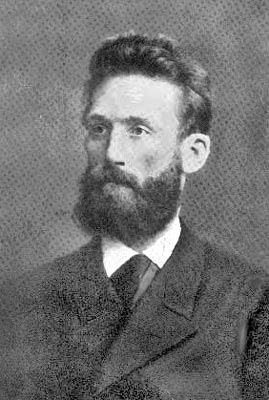
Wilhelm Ameke.In 1799 one writer alludes to Hahnemann by calling
him “a man who has made himself a name in Germany both as a
chemist and a practitioner [who] deserves especial recommendation,”
[Ameke, 37] and adds that “every article gives evidence of
having been written with the greatest care.” [Ameke, 37]
Another critic expresses his admiration for “a man who has
conferred so many benefits on science…by his valuable
translations…that are faithful and successful…[who has] added
precious notes which expand and elucidate [the original]”
[Ameke, 40] such that “he has thus enhanced the value of the
work.” [Ameke, 40] So highly regarded were Hahnemann’s
translations “which he has enriched with his own notes.”
[Ameke, 40] These “great many explanatory and supplementary
remarks…give the translation a great advantage over the original.”
[Ameke, 40]Such writers could clearly appreciate the “thoroughness
of his emendations…his short notes…[which] serve to explain the
text…and which is enhanced by the translator’s notes.”
[Ameke, 40-41] Such comments reveal the clear and unambiguous
recognition which he received for his “thorough pharmaceutical
knowledge and industry…this celebrated chemist…this meritorious
physician…the meritorious Hahnemann…whom chemistry has to thank for
many important discoveries.” [Ameke, 41] He is unanimously
applauded as one who “has won for himself unfading laurels,”
[Ameke, 42] for his contributions to science. Hahnemann was “so
much respected and renowned for his valuable services,” [Ameke,
90] that he did not require to “to make himself more popular
with the German public.” [Ameke, 90]When Hahnemann correctly stated that “Arsenic
does not contain muriatic acid…[this showed] Hahnemann’s
superiority,” [Ameke, 18] in points of chemistry. In all his
translations, “accuracy prevails everywhere,” [Ameke,
22] and reflects the “extreme care he employed in his labours.”
[Ameke, 22] As early as 1784, “Hahnemann advocated the
crystallisation of tartar emetic.” [Ameke, 24] It was in the
fine details of his corrections and footnote additions that he earned
his reputation as a meticulous, highly knowledgeable, diligent and thus
reliable scientific translator. In time, he garnered a similar
reputation for his work reforming pharmacy, for example, “the
regulation and sale of poisons,” [Ameke, 34] the “preservation
of odoriferous substances,” [Ameke, 34] and the “evaporation
of extracts over water baths.” [Ameke, 34] Ameke also lists
many pages of examples of his contributions to pharmacy and examples of
his recommended small doses for drugs of all types.In such innumerable ways Hahnemann was considered to
have “enriched our therapeutic thesaurus.” [Ameke, 35]
In every case, they all prove “how thoroughly Hahnemann had
studied the subject,” [Ameke, 34] in question, whether it was
botany, pharmacy or chemistry. It meant that when he made a statement “every
page shows that the well informed author speaks from experience,”
[Ameke, 37] it shows his great diligence, that he composed work of more
than “an ordinary character,” [Ameke, 37] that he
always produced “useful work,” [Ameke, 38] and that “he
surpassed most of them in knowledge of the subjects,” [Ameke,
38] on which he expounded. Such factors considerably enhanced his
scientific credentials.
A True Science
Hahnemann was keenly aware of all developments taking
place in science, especially his beloved chemistry. Post-Enlightenment,
it was a time of great systematisation of knowledge in all fields and
the building up of grand systems for the first time. This 18th century
phase of prolific experimentation of which he was part, was in turn
founded upon the pioneering work of earlier figures like Bacon
[1561-1626], Galileo [1564-1642], Descartes [1596-1650] and Newton
[1642-1727], who first set thinkers down the road towards
experimentation, as sources of ideas and their confirmation, and away
from Church dogma.
“Galileo established a new criterion for truth:
truth was only that what [in principle] everyone could test for himself
and see to be true. The means used for this was the experiment, that
magnificent invention of the western world, brought to perfection by
Galileo…before Galileo, theoretical definition was the prime criterion
for truth…the completely new element brought in by Galileo had to do
not so much with method as such, but rather with truth and
authority…’the leitmotiv of Galileo’s work as I see it was his
passionate opposition to belief based on authority.'[Einstein]…”[Pietschmann, 156-7]
Therefore, the development of his ideas into a grand
system was not only his own idea, but also part of a ‘tide of the times’
or ‘zeitgeist’: an impulse pushing many others along. Experimentation
led to the establishment of principles and laws and in this manner the
fabric of science theory was gradually woven c.1700-1900 [see Russell,
1943; Rogers, 1935; and Tarnas, 1996]. In this sense, Hahnemann
undoubtedly drew on the atmosphere of his times.
“[The Organon] gives clear expression of
Hahnemann’s originality, but is also the product of a mind steeped in
the ideas of the eighteenth-century Enlightenment, and informed by the
liberal humanitarianism of Jean-Jacques Rousseau.” [Handley,
1990, 3]He was scientific in that primary and fundamental
sense of boldly rejecting received dogmas from the past about the nature
of truth and the world, and strongly favoured the confirmation of ideas
through experiment and observation in the outer world. Hahnemann
certainly possessed that elevation of sense data and observations as the
sole arbiters of truth, which lies at the very heart of natural science.
In that sense he was profoundly scientific and probably more scientific
than most of his medical contemporaries. In this sense, he was also
typical of the Enlightenment. Like Kant, he also felt that profound
truths could be laid out in a logical framework of aphorisms.That he thoroughly detested medical systems of ideas
and speculations for their own sake, is very apparent in all his
writings: “No learned brains could unravel the skein of
hypotheses and theories which entangled the professors and set them all
at odds…there were no experiments, there was no painstaking research;
there were only odd and eccentric systems which were exalted into
dogmas, without any possibility of testing senseless methods of
treatment.” [Gumpert, 15]Hahnemann’s clear understanding of the dismal value
of ‘medical systems’ is yet further illustrated by the following quotes:
“anon came the alchymist with his salt, sulphur and mercury;
anon Silvius, with his acids, biles and mucus…our system-builders
delighted in these metaphysical heights, where it was so easy to win
territory; for in the boundless region of speculation every one becomes
a ruler who can most effectually elevate himself beyond the domain of
the senses.” [Aesculapius in the Balance, 1805, in Lesser
Writings, 421-2]
“Physiology…looked only through the spectacles
of hypothetical conceits, gross mechanical explanations, and pretensions
to systems…little has been added…what are we to think of a science,
the operations of which are founded upon perhapses and blind chance?”
[Aesculapius In the Balance, 1805, in Lesser Writings, pp.423-6] And “because
they placed the essence of the medical art, and their own chief pride,
in explaining much even of the inexplicable…this was the first and
great delusion they practised upon themselves and on the world. This was
the unhappy conceit which, from Galen’s time down to our own, made the
medical art a stage for the display of the most fantastic, often most
self-contradictory, hypotheses, explanations, demonstrations,
conjectures, dogmas, and systems, whose evil consequences are not to be
overlooked.” [On the Value of the Speculative Systems of
Medicine, 1808, in Lesser Writings, 489-90]
“Hahnemann had cast homeopathy in substantially
the same eighteenth century mould that had given shape to the systems of
Cullen, Brown and Rush; as regular physicians assessed it, homeopathy
offered an unambiguous example of extreme rationalism informing a
dogmatic system of practice with dire consequences.” [Warner,
1986, 52-3]Yet it is fairly clear that, unlike many of his
contemporaries, he conceived this system-building impulse not as an end
in itself, to create a ‘medical system’ based upon speculation—an
approach he detested—but springing directly from his practical
experimentation.
“Samuel Hahnemann was not only a physician at
war with the medical practices of his time, he was also a great
experimental scientist. He observed and collected his observations until
gradually a pattern showed itself…observation alone is not sufficient,
it must be coupled with right relating, relating in right order until we
arrive in the Goethean sense at the idea, the underlying principle or
pattern of a thing – the ‘urphenomenon’.” [Brieger, 241]
From Hahnemann’s Preface to the 2nd Organon: “…the
splendid juggling of so-called theoretical medicine, in which a priori
conceptions and speculative subtleties raised a number of proud
schools…the art of medicine was merely a pseudo-scientific
fabrication, remodelled from time to time to meet the prevailing
fashion.” [ibid., xv]In Aphorism 6, he bemoans the, “futility of
transcendental speculations which can receive no confirmation from
experience.” [ibid., p. 32] And, as Dr. Krauss candidly states
in his Introduction to the 2nd Organon: “Hahnemann was, in all
essentials, a flawless experimenter.” [Organon, xxiv]
“The era of scientific medical experimentation
begins with Hahnemann and nobody else. Scientific to the core, Hahnemann
experimented scientifically for scientific observation.”
[ibid., xxvii] Finally, Hahnemann states in the Preface to his 2nd
Organon: “The true healing art is in its nature a pure science
of experience, and can and must rest upon clear facts and on the
sensible phenomena pertaining to their sphere of action.’ and that it
‘…dares not take a single step out of the sphere of pure,
well-observed experience and experiment, if it would avoid becoming a
nullity, a farce.” [ibid., xiv]These quotes clearly demonstrate that Hahnemann
should be regarded as a scientist in the most modern sense and in no way
did he devise or invent homeopathy as a speculative ‘system’ in the
manner Warner suggests in the quote above. Yet, the temptation for
Hahnemann to have simply reverted to the allopathic mode of practice,
must, at times, have been overwhelmingly strong. We can only admire
Hahnemann’s astonishing determination to get on with the task he had set
himself and to be wholly undistracted by every force, which tried to
oppose him. His will-power and drive must have been exceptional and
there are many people who would have broken under the pressure he faced
or who would simply have done something else less arduous. He firmly
believed that he was creating a revolutionary new system of medicine for
humanity. Frustratingly for his followers, he was addicted to
experimentation and improvement and never stopped changing his ideas and
techniques right up to the last [see Handley, 1997]. The significance of
this is that while many speculators deep-freeze their ideas into a
dogmatic system they are then most unwilling ever to change, Hahnemann
proved his credentials as primarily an experimentalist, by constantly
revising his medical system in the light of new experience, so that it
never stood still but was ever evolving.Hahnemann dismissed the Galenic medicine in which he
had been trained on the grounds that it was untenable as a scientific
system. Rejecting experiment and observation, it employed only “sophistical
whimsicalities” [Hahnemann, 1805, 420] and gazed at health and
disease only by “looking only through the spectacles of
hypothetical conceits, gross mechanical explanations, and pretensions to
systems.” [Hahnemann, 1805, 426]Hahnemann referred to Galen, as that self-appointed “torch
and trumpet of general therapeutics, a man more desirous of inventing a
subtle system than of consulting experience. Disdaining to learn the
powers of medicines by instituting experiments, he gave the bad example
of generalizing and framing hypotheses;” [Hahnemann, 1812, 592]
for it is even true today that “in the boundless region of
speculation every one becomes a ruler who can most effectually elevate
himself beyond the domain of the senses.” [Hahnemann, 1805,
421-2] Such theoreticians can and do display “the most
fantastic, often most self-contradictory, hypotheses, explanations,
demonstrations, conjectures, dogmas, and systems,” [Hahnemann,
1808, 489-90] never conduct such experiments, in which homeopathy is
entirely based, and so their views are never founded upon a science
rooted in the empirical investigations and experiments beloved of Bacon,
but only in hopeless armchair conjecture.
Scientific Evidence
Regarding the question of ‘scientific evidence’ for
homeopathy, then much depends on what you mean by ‘evidence’ and
‘scientific’, as these can mean different things to different people.
For example, if science is defined in the old style, pure Baconian sense
of induction rooted in empirical studies and experiments, then there is
no medicine more scientific than homeopathy, it being based entirely
upon repeatable experiments on the human subject, both in health and
disease, as Bacon would have demanded.
“Science derives its knowledge of life from a
consideration of the facts of observation and experience,”[Close,
11] Homeopathy was indeed “the logical and legitimate offspring
of the Inductive Method and Philosophy of Aristotle and Lord Bacon.”
[Close, 15] Being “founded and developed into a scientific
system…by Hahnemann…under the principles of the Inductive method of
science as developed by Lord Bacon,” [Close, 16-17] and even
like “chemistry or physics, homeopathy is established under the
principles of the inductive method…its elements are: 1. the phenomena
of disease; 2. the phenomena produced by drugs when administered to
healthy persons; and 3. the general law of mutual action…Newton’s
Third law of Motion…the law of similars, which connects the two series
of phenomena,” [Close, 19].
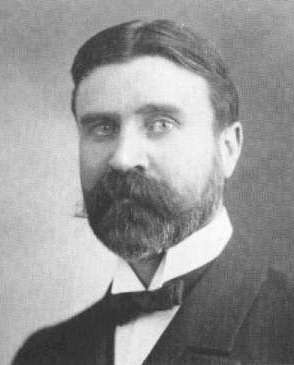
Stuart M. Close.Homeopathy involves: “1. the totality of the
symptoms of the patient is the basis of medical treatment; 2. the use of
single medicines…[whose] symptoms and sphere of action…have been
predetermined by pure, controlled experiments upon healthy persons; 3.
the principle of symptom-similarity as the guide to the choice of the
remedy; 4. the minimum dose capable of producing a dynamic or functional
reaction.” [Close, 22]. All these principles derive not from
vain conceits and wordy conjecture, but solely from experiment, which is
observation and experience, as defined by Bacon. In that sense,
homeopathy is certainly a science in the accepted sense. That it is,
secondarily, a science, which stands in conflict with orthodox science
is, admittedly, another issue.Alternatively, if we define science as being rooted
in verifiability, then again, the amassed evidence of hundreds of
entirely honourable and highly-qualified MD practitioners, spanning two
centuries, would suffice for many. While I doubt that ‘armchair
disbelievers’ are especially impressed by statistical proof, yet, again
much impressive epidemiological data can be adduced from many times and
places regarding the superiority of homeopathic treatment in Influenza,
Cholera, Typhus and Scarlet Fever, etc. Here is a representative sample
of such data:Epidemiological data collected by homeopaths can also
be viewed as excellent supporting evidence for homeopathy. It certainly
comprises a form of scientific evidence. For example, “during
the great cholera epidemics in England in 1830 and 1854, Naples in
1854-5, Vienna in 1836, and New York in the 1850s, the average mortality
rate of those treated regular old school medicine was 60-70%. In the
hands of homeopathy, the death rate across Europe was 9%, and in New
York 4-5%.” [Diamond, 18] Also, “in 1854 there was a
severe outbreak of Cholera in London…figures revealed that where the
death rate in other hospitals was 51.8%, in the London Homeopathic
Hospital the rate was only 16.4% in all the true Cholera cases.”
[Blackie, 11] Many further examples can be adduced. When Cholera “struck
Edinburgh in 1848, the homeopathic dispensary…achieved a mortality
rate of 24%; the Board of Health’s figures…had a mortality of 68%…at
Liverpool in 1849…a death rate of 26% [pertained for homeopathy, as]
against a general rate…of 46%.” [Nicholls, 146] In 1851, “a
physician from Cincinnati admitted to the Convention of the AMA that all
his colleagues agreed with him – Camphor had been one of their most
valuable remedies in the Cholera epidemics of 1848 and 1849,”
[Griggs, 229] Needless to say, Camphor was first recommended for Cholera
by Hahnemann entirely on it its ability when ingested in crude dose to
induce similar symptoms in the healthy.
Margery Grace Blackie.
Hahnemann’s Empirical Stance
Hahnemann’s venture into the proving of drugs can be
justifiably regarded as an example of his impeccable credentials as a
leading experimentalist of his day. This empirical approach has become
so dominant in the last two centuries that it is easy for us today to
lose sight of the revolutionary nature of this approach in the 1790s.Hahnemann’s attitude towards knowledge was very
modern; he took a very scientific approach. To be regarded as “fully
successful a scientific theory must provide us with a literally true
description of what the world is like.” [Zynda] The “acceptance
of a scientific theory involves the belief that it is empirically
adequate,” [Zynda] which basically means it must be in accord
with all the observations of the matter concerned, not just some of them
or some of them some of the time. A scientific theory “is
“empirically adequate” if it gets things right about the
observable phenomena in nature.” [Zynda] What counts as
“observable” “is what could be observed by a suitably
placed being with sensory abilities similar to those characteristic of
human beings…” [Zynda] This attitude is called, “Sola
Experientia: any claim to knowledge, any support for opinion, must come
from experience; experience trumps all” [Van Fraassen; 120] “The
empirical sciences do live by the rule of Sola Experientia: nothing
trumps experience. The bottom line is agreement from experimental and
observational fact.” [Van Fraassen; 152] For Hahnemann
experience did trump all. Repeatedly in his writings he mentions
observation and experience as the sole arbiters of truth, in
contradistinction to the received authority and cherished theories of
long-dead revered figures from the medical past.
Van Fraassen.A ‘good scientist’ should be able to view all
results, all patterns and all outcomes neutrally, willing and able to
accept as valid any result. It is clear that Hahnemann was of this
attitude as he changed his opinion many times and that reveals his
neutral stance; rather than building a new medical system on fine-spun
theories to which he doggedly clung, he built a system on experiment,
experience and meticulous observation.Having said that, however, Hahnemann’s discoveries
found themselves strongly at variance with the orthodox medicine of his
day. This inevitably placed him in an awkward position, in the position
of a heretic. It is well-known that he soon came to regard mainstream
medicine as “an ossified system,” [Berlin, 1996; 62]
badly in need of revision if not wholesale reform. Rebellion against
such a “formal and schematic orthodoxy,” [Berlin, 1996;
71] was therefore left to persons like himself, gifted persons who
defied such dogma by “a great act of rebellion.”
[Berlin, 1996; 61] He regarded mainstream medicine and its theories of
health and disease as “the integuments of orthodoxies which are
the congealed answers to dead or obsolescent questions,”
[Berlin, 1996; 75] conformity with which he also regarded as a huge
barrier to progress, because such a system not only inherently resists
change, but it also seeks to thoroughly denounce those creative
visionaries and “their capacity to improvise.” [Berlin,
1996; 52] Such orthodoxy sought to have such visionaries “slaughtered
on the altar of some dogma,” [Berlin, 1996; 75] and “brought
into conformity with the new despotism.” [Berlin, 1996; 76]Hahnemann regarded the ideas of allopathy as “constructions
of the intellect, something that was not found but made…an enormous
fallacy,” [Berlin, 1979; 301-2] and he therefore sought
personally to “break through the orthodoxy…[and] sweep away
the painstaking edifices of their honourable but limited predecessors
who…tend to imprison thought within their own tidy but fatally
misconceived constructions.” [Berlin, 1996, 72] As far as he
was concerned, to “confuse our own constructions with eternal
laws or divine decrees is one of the most fatal delusions of men.”
[Berlin, 1997a; 303] Such pretty formulas are “artificial
constructions, logical figments with no necessary relation to the
outside world,” [Berlin, 2000; 123] which always “leave
out the richest and most important part of human experience…daily
life, history, human laws and institutions, the modes of human self-
expression.” [Berlin, 2000; 110] In such a situation, for
innovative and pioneering people like Hahnemann, then “the Tree
of Knowledge has killed the Tree of Life.” [Berlin, 1997a; 303]
Although Hahnemann can be depicted as a man, “swimming against
the current of his time,” [Berlin, 1997b] not quite in his
empirical stance, but certainly in his disputatious approach to
adherents of mainstream medicine who refused to acknowledge the
importance of his discoveries.Therefore it is clear that Hahnemann was a rebel. Or,
more accurately, he was rendered a rebel by the refusal of his medical
confreres to accept his doctrines and methods into the mainstream.
People like Hahnemann are born to rebel in a sense because of their
innate pioneering genius. Such “men of authentic genius are
necessarily to a large degree destructive of past traditions…[such
rebellious persons] always transform, upset and destroy.”
[Berlin, 1996; 70] Such rebels are “bound to subvert, break
through, destroy, liberate, let in air from outside…” [Berlin,
1996; 67]For Hahnemann doubtless sought, through his rampant
empiricism, to invalidate “the elegant euphemisms,”
[Auden, Ode to Terminus, 809] of a hopeless theoretical medicine and to “cut
the brambles of men’s errors down.” [Auden, Luther, 301] Seen
from without, then, Hahnemann’s work in the creation of homeopathy
mostly from observation and experiment, especially in the provings of
medicines, has to be regarded as a truly scientific enterprise and this
renders Hahnemann a true scientist and homeopathy a true science.
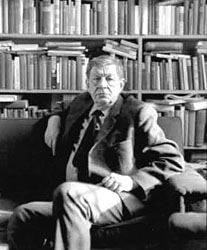
Auden.
Sources:
Wilhelm Ameke, History
of Homœopathy, with an appendix on the present state of University
medicine, translated by A. E. Drysdale, edited by R. E. Dudgeon, London:
E. Gould & Son, 1885.W H Auden, Collected
Poems, Edited by Edward Mendelson, London: Faber, 1994Sir Isaiah Berlin, ‘Georges
Sorel’ in Against the Current: Essays in the History of Ideas, 1979,
p.298-302Sir Isaiah Berlin, The
Sense of Reality – Studies in Ideas and Their History, London: Pimlico,
1996Sir Isaiah Berlin,
Against the Current: Essays in the History of Ideas, London: Pimlico,
1997aSir Isaiah Berlin,
Joseph de Maistre and the origins of Fascism. The Crooked Timber of
Humanity, Chapters in the History of Ideas. Princeton: University of
Princeton Press, 1997b: 91-174.Sir Isaiah Berlin,
Three Critics of the Enlightenment: Vico, Hamann, Herder, Princeton:
Princeton Univ Press, 2000Margery G Blackie MD,
The Patient Not the Cure, London: McDonald & Janes, 1976Johanna Brieger,
Methodological Obstacles In Homeopathic Research, BHJ 50, 1961, 239-45Stuart Close MD,
Lectures and Essays on Homeopathic Philosophy, Philadelphia: Erhart
& Karl, 1924Trevor Cook, Samuel
Hahnemann The Founder of Homeopathy, Thorsons, 1981W John Diamond MD, The
Clinical Practice of Complementary, Alternative and Western Medicine,
Washington: CRC Press, 2001Albert Einstein,
Preface to Galileo’s Dialogue of the Two Principal World Systems, 1952,
German editionBarbara Griggs, Green
Pharmacy A History of Herbal Medicine, London: Jill Norman &
Hobhouse, 1981Martin Gumpert,
Hahnemann The Adventurous Career of a Medical Rebel, L B Fischer Publ
Corp, New York, 1945: English version of, Hahnemann, die Abenteurlichen
Schicksale einea Arztlichen Rebellen und seiner Lehre, der
Homeopathie”, S.Fischer, Berlin, 1934; translated from the German
by Claud W Sykes.Richard Haehl, Samuel
Hahnemann His Life and Works, 2 volumes, 1922Samuel Hahnemann,
Aesculapius in the Balance, 1805, in Hahnemann’s Lesser Writings, edited
by Dudgeon, London: Henry Turner & Co, 1895, 421-2Samuel, Hahnemann, On
the Value of the Speculative Systems of Medicine, 1808, in Lesser
Writings, 489-90Samuel Hahnemann, On
The Helleborism of the Ancients, 1812, in Hahnemann’s Lesser WritingsSamuel Hahnemann, The
Organon, combined 5th/6th Edition, 1841, Edited by Boericke and Dudgeon,
Jain Reprint,Rima Handley, A
Homeopathic Love Story, North Atlantic Books, USA, 1990Rima Handley, In
Search of the Later Hahnemann, Beaconsfield, UK, 1997Phillip A Nicholls,
Homeopathy and the Medical Profession, London: Croom Helm, 1988Herbert Pietschmann,
Medicine – A Discipline Between Art & Science, BHJ 72.3, July 1983,
155-61Arthur Kenyon Rogers,
A Student’s History of Philosophy, MacMillan, New York, 1935Bertrand Russell, A
History of Western Philosophy, Unwin, London, 1943Richard Tarnas, The
Passion of the Western Mind, Pimlico, London, 1996B Van Fraassen, The
Empirical Stance, Yale University Press, 2002John H Warner, The
Therapeutic Perspective, Medical Practice, Knowledge and Identity in
America 1820-85, Harvard Univ. Press, USA, 1986Lyle Zynda, Lectures
on the Philosophy of Science [Princeton, 1994],Lecture 17, Scientific
Realism vs. Constructive Empiricism; website accessed 12-4-06: